
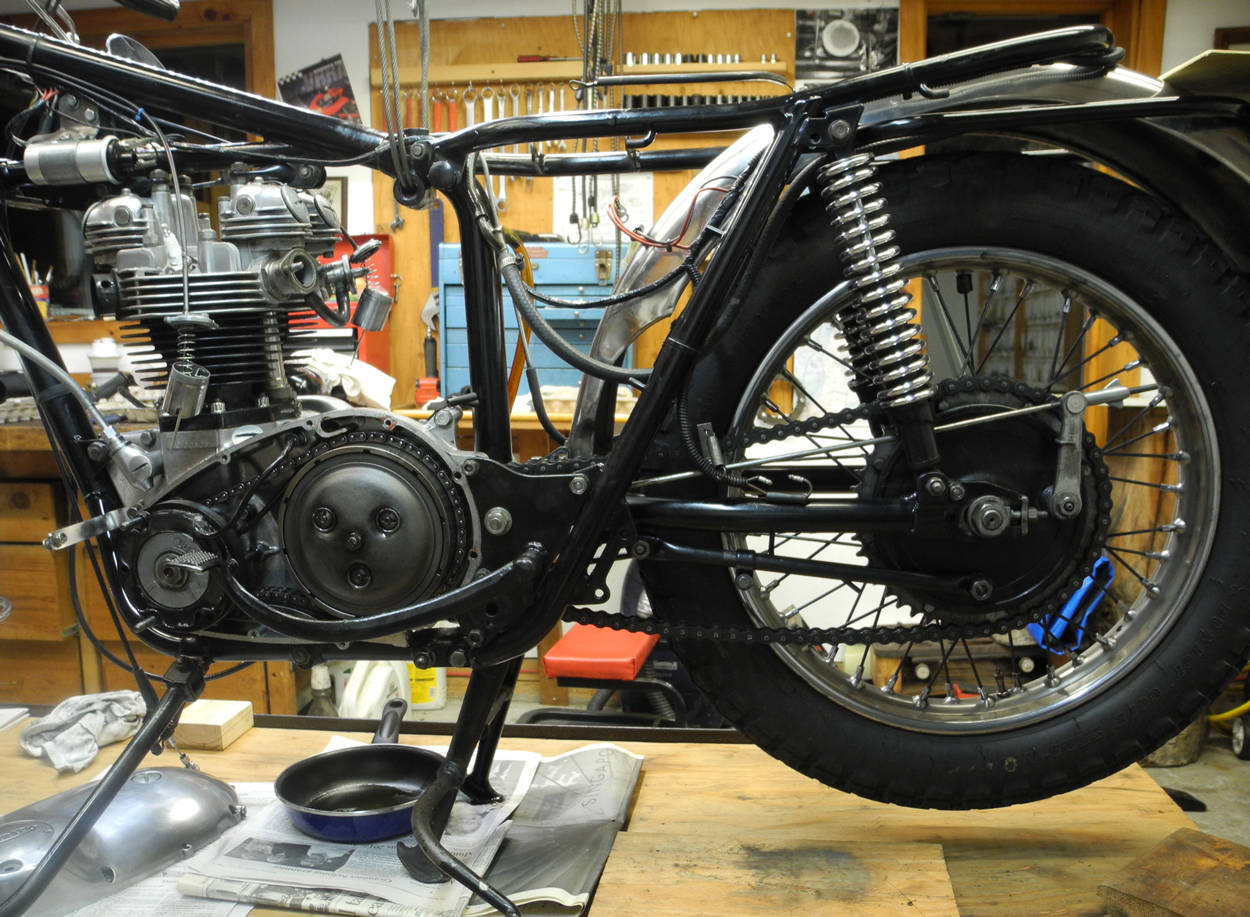
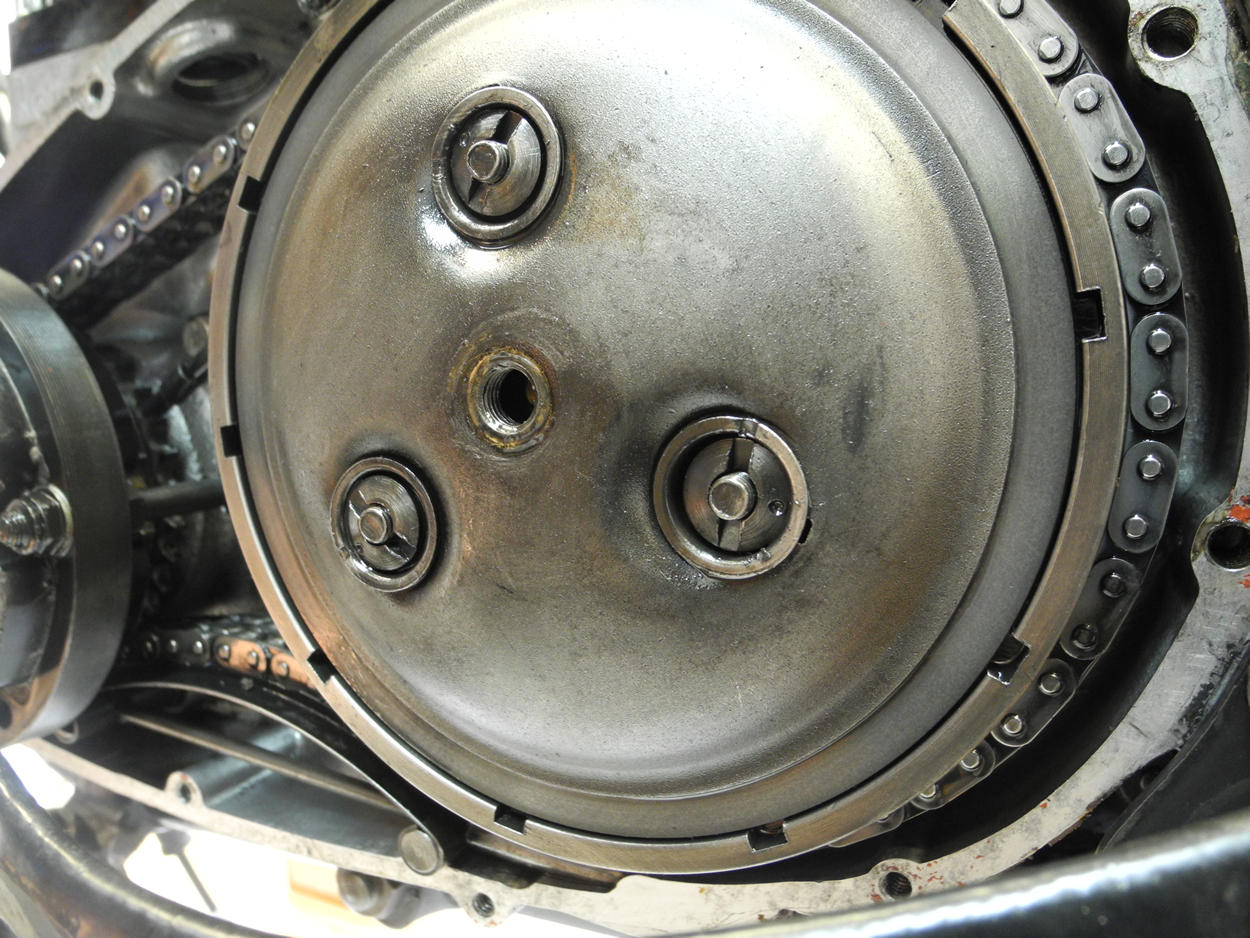
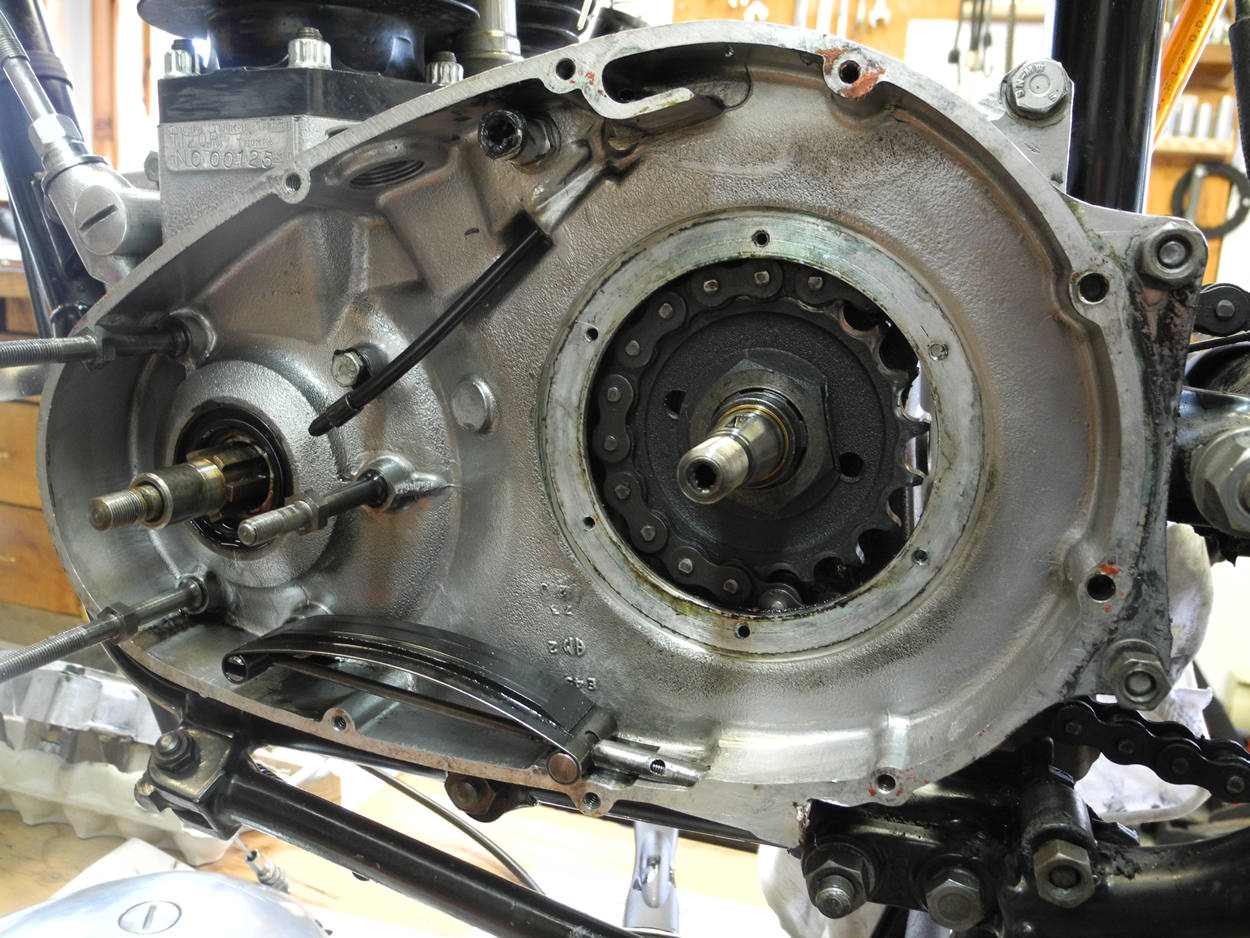
The following series of photos shows removal of the transmission, including engine sprocket, chain wheel, primary chain, and clutch center.
(Click Photos to Enlarge)
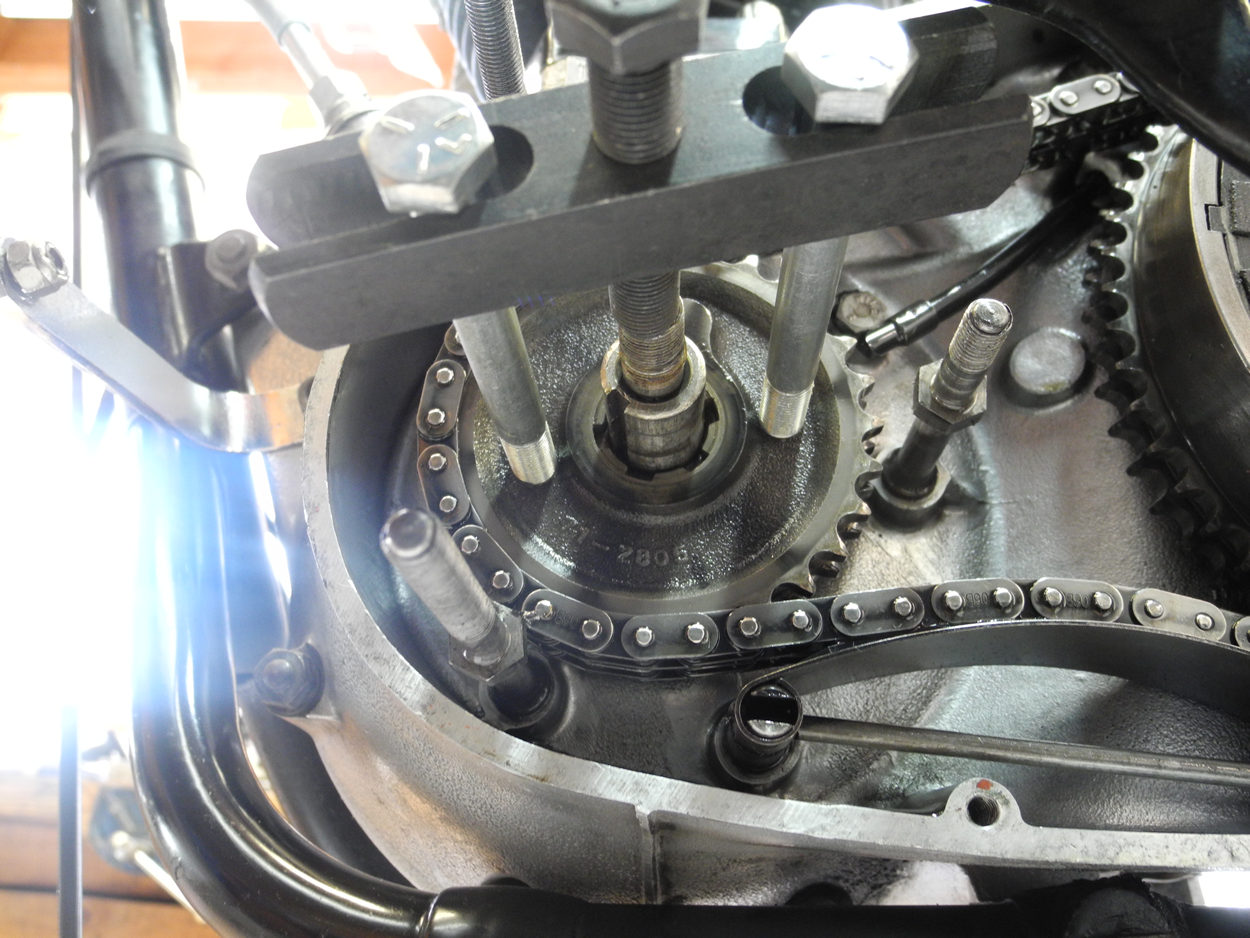
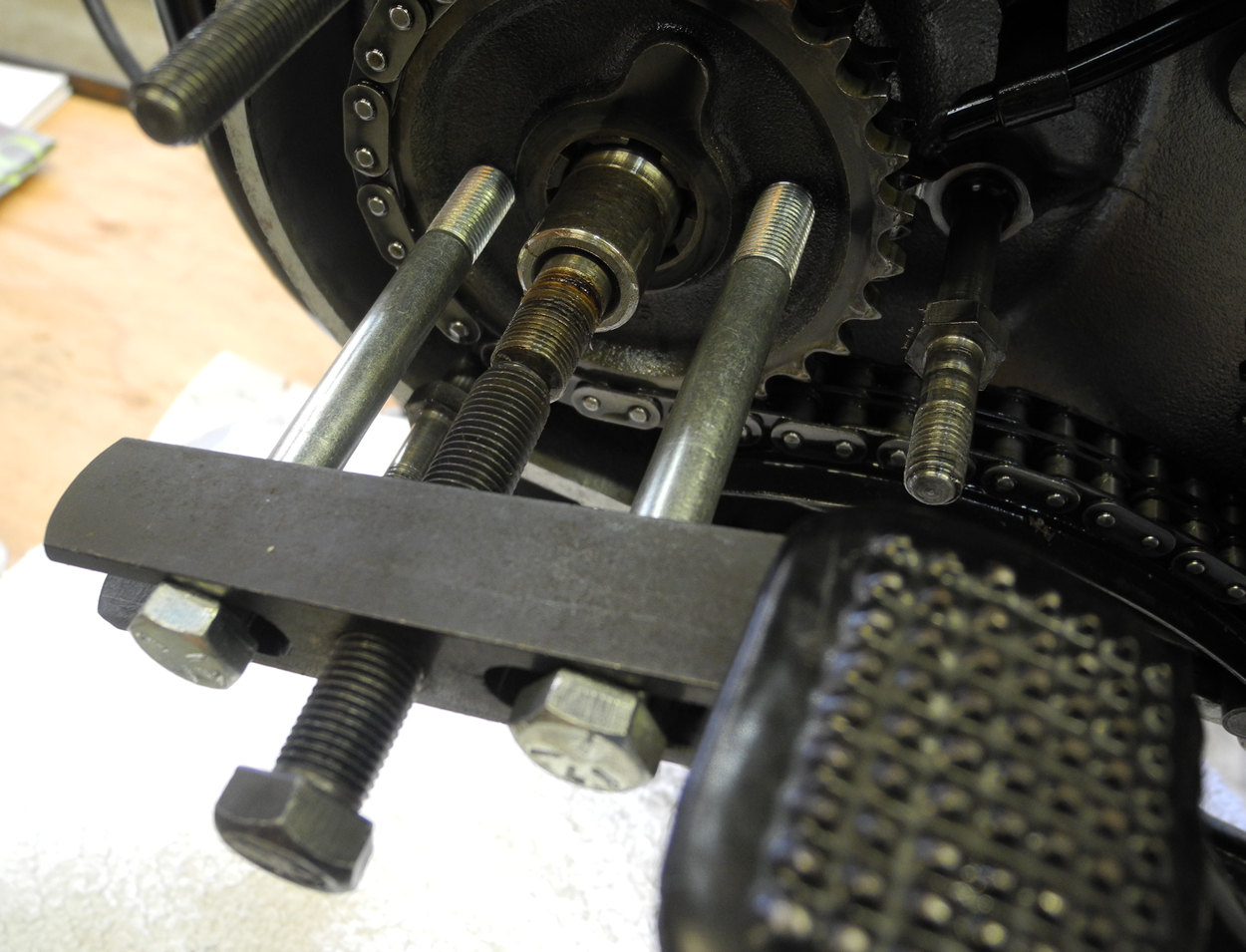
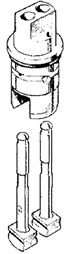
There's a couple of important things to know about the diminutive but highly useful, if not totally necessary Triumph clutch center extractor (series D622/3 for 1969 650s).
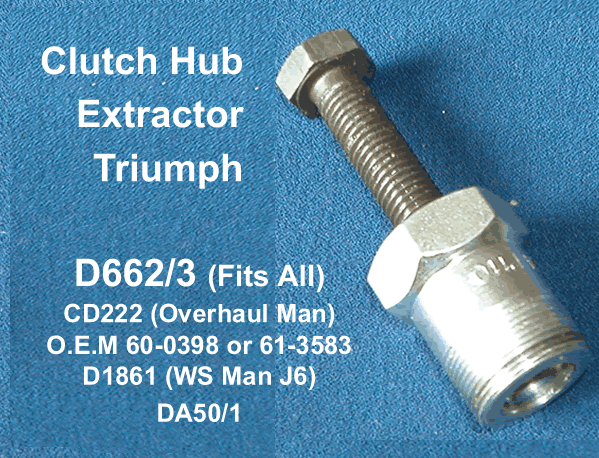
If you purchase this tool from a reputable parts dealer you should receive the latest version, the D622/3. If you acquire one from another source, be aware that there are three variations of this tool and two of them have potential compatability issues.
When used properly (as an extractor) this tool works great. When used improperly (as a puller) the most frequent result is a spoiled tool and no joy in removing the clutch hub.
To understand how to properly use the hub extractor tool, see this section of the Bonnie Ref.
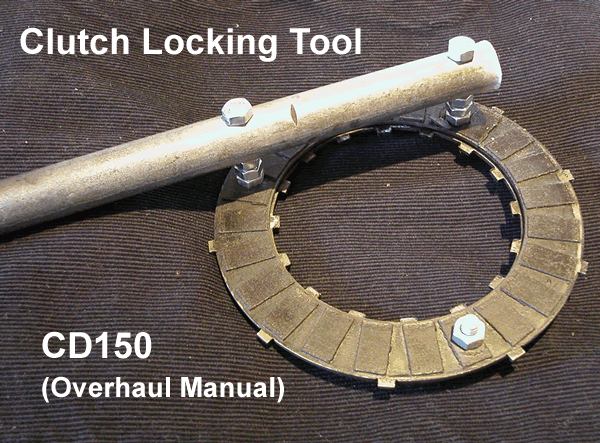
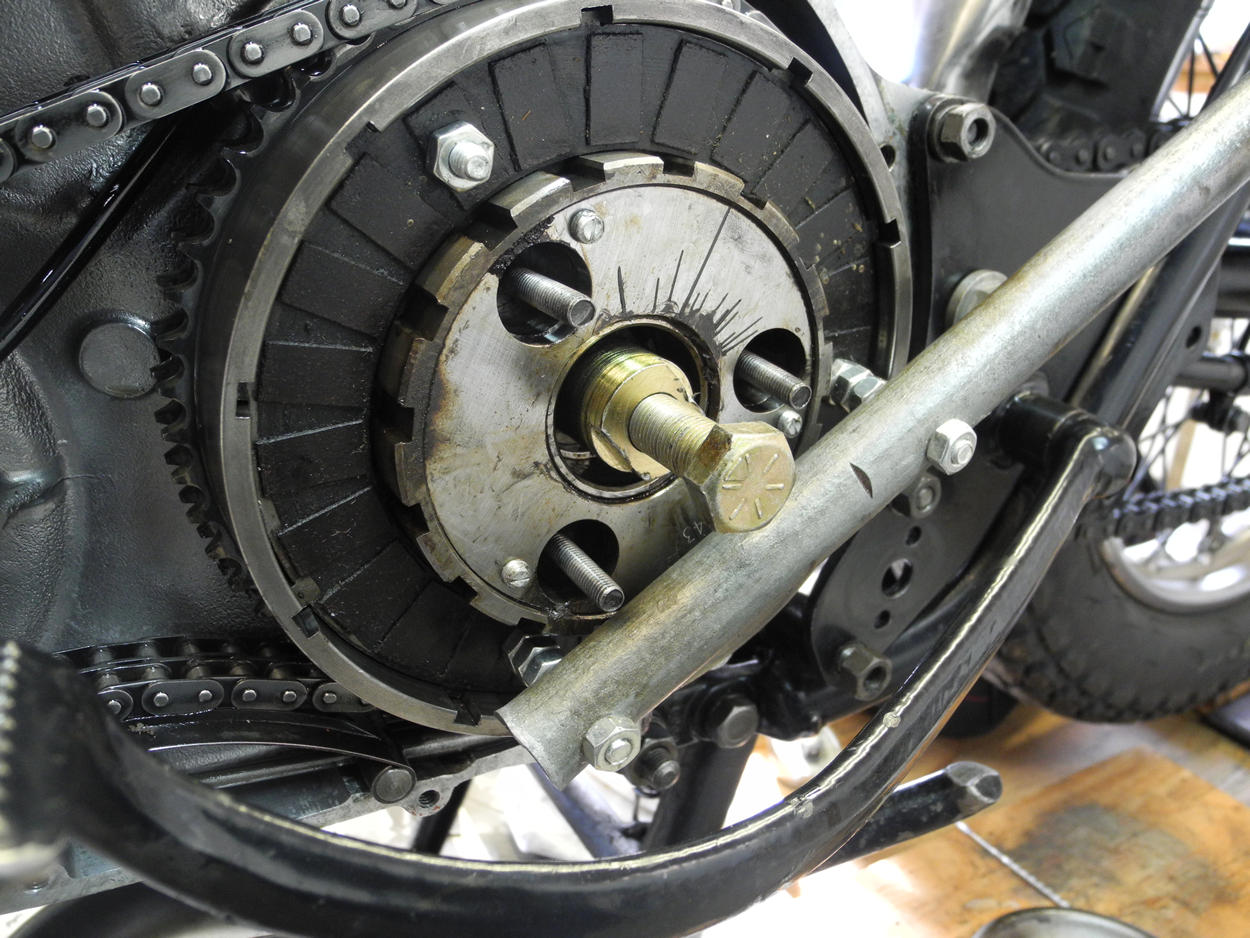
A clutch locking tool is indespensable for many jobs and it's one tool that you can easily make for yourself using a couple of old clutch plates, a piece of metal pipe, and a couple of nuts and bolts.
The clutch locking tool shown in action below as it holds the clutch from turning while the clutch center is extracted from the mainshaft.
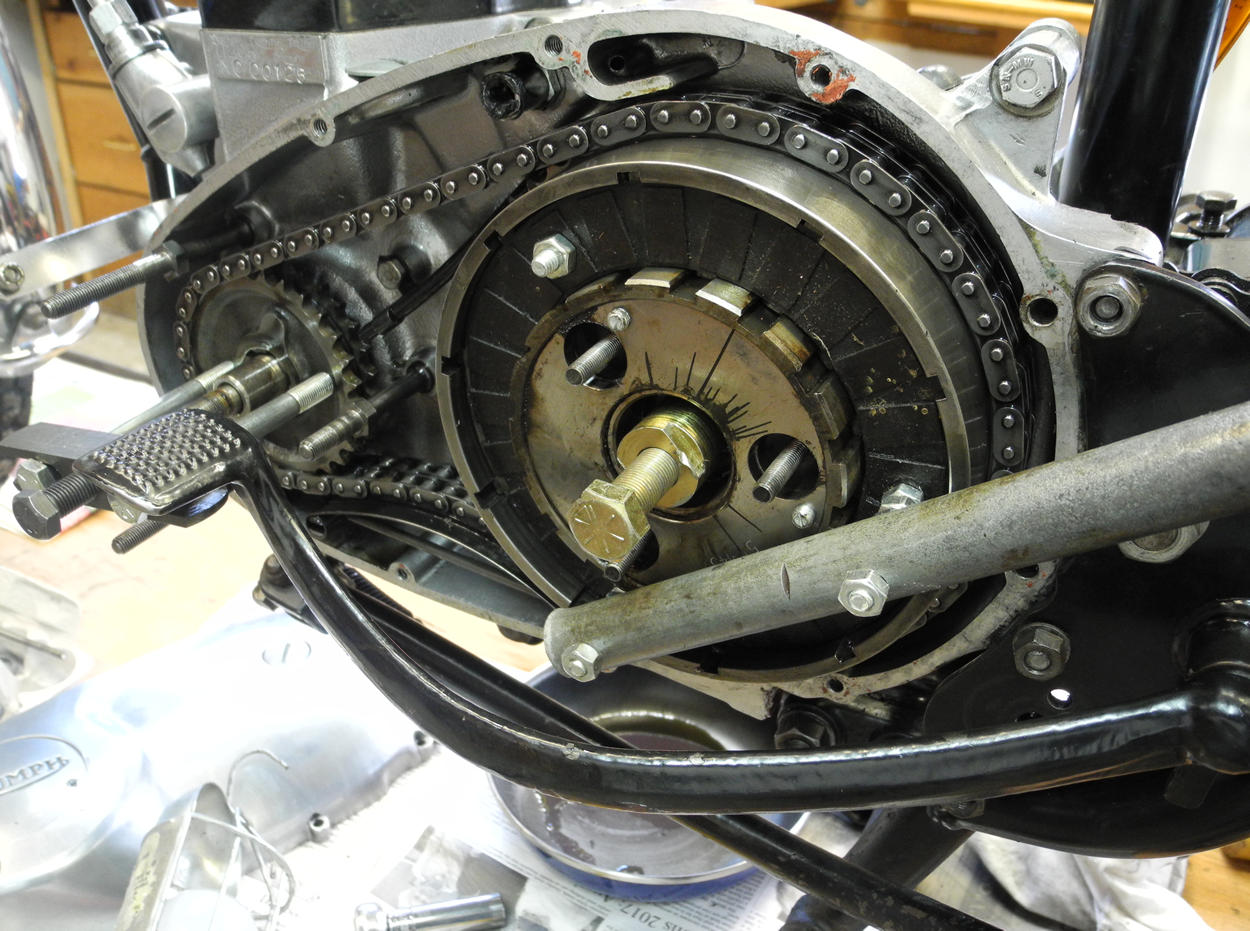
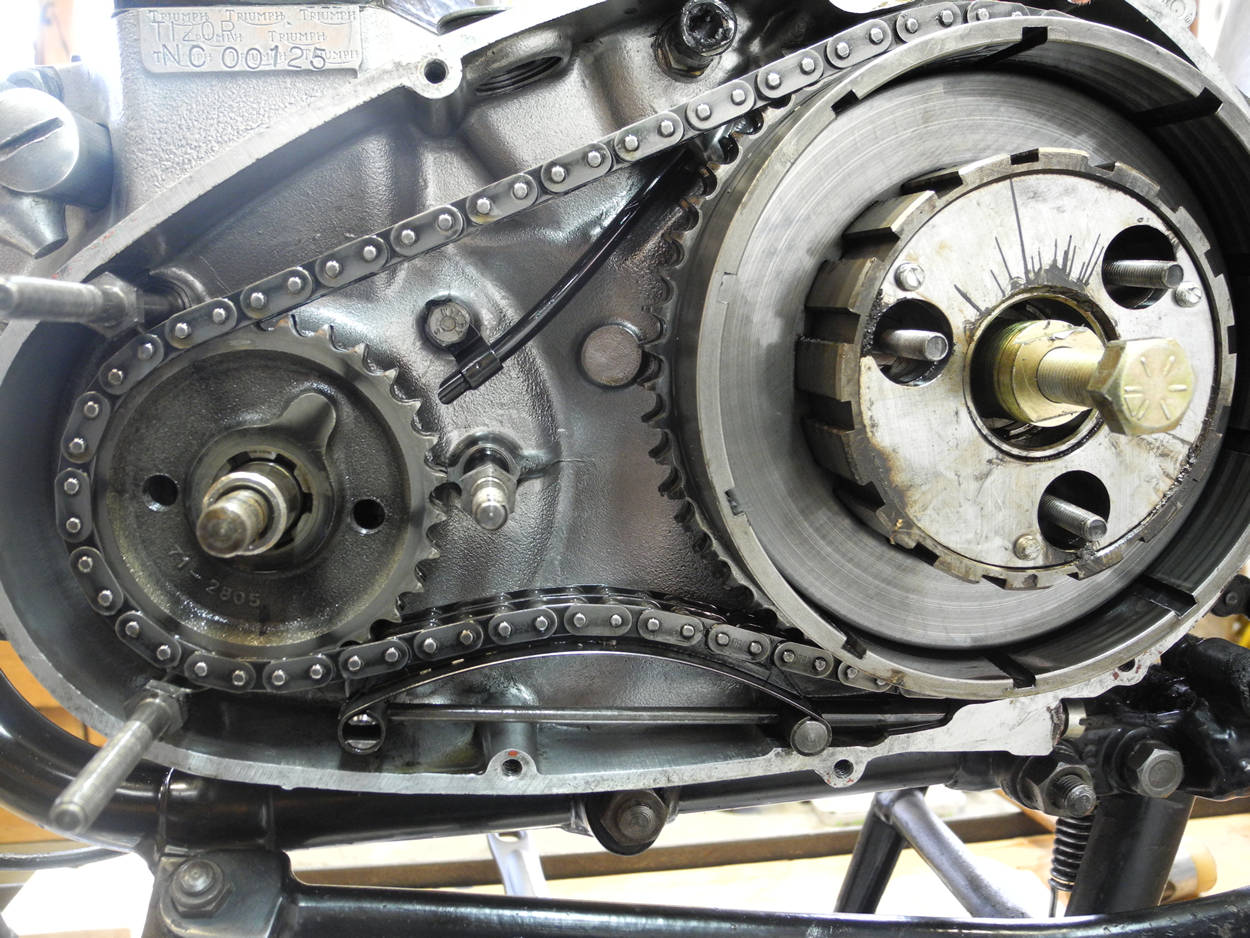
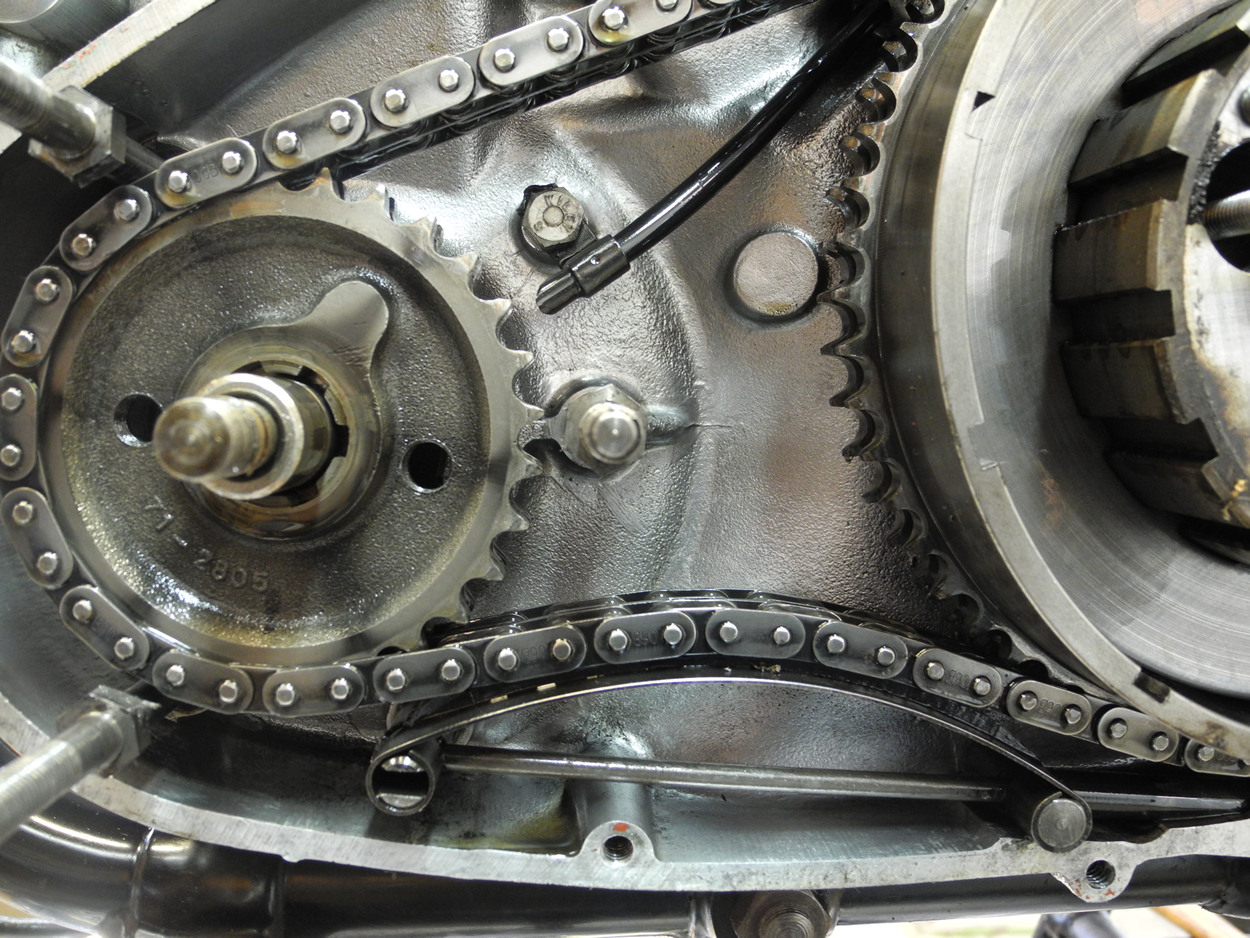
When the primary chain adjuster and the chain become too arched, as illustrated here, it's time for a new primary chain.

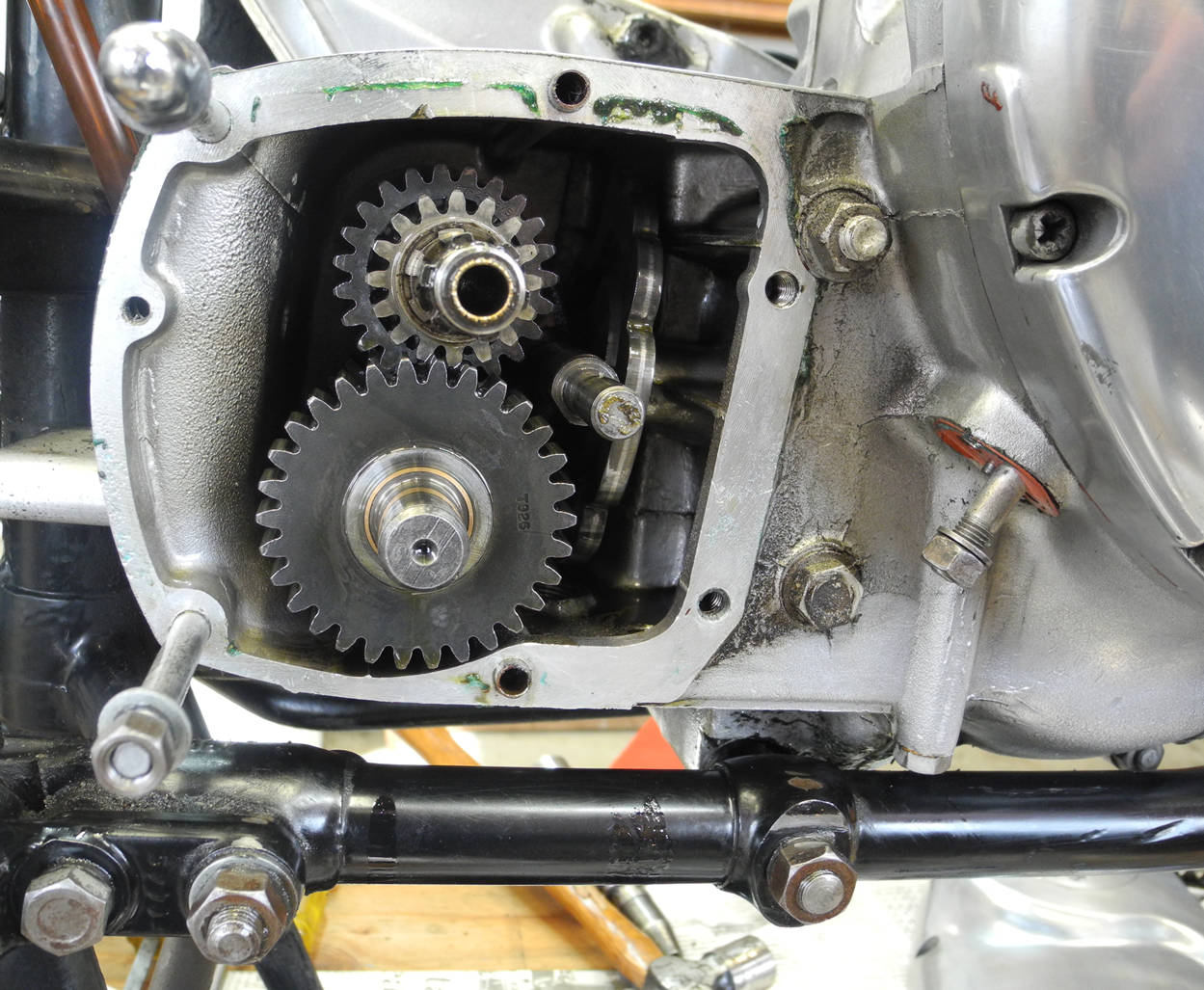
This is the position of the gear shifter when no shifting is taking place.
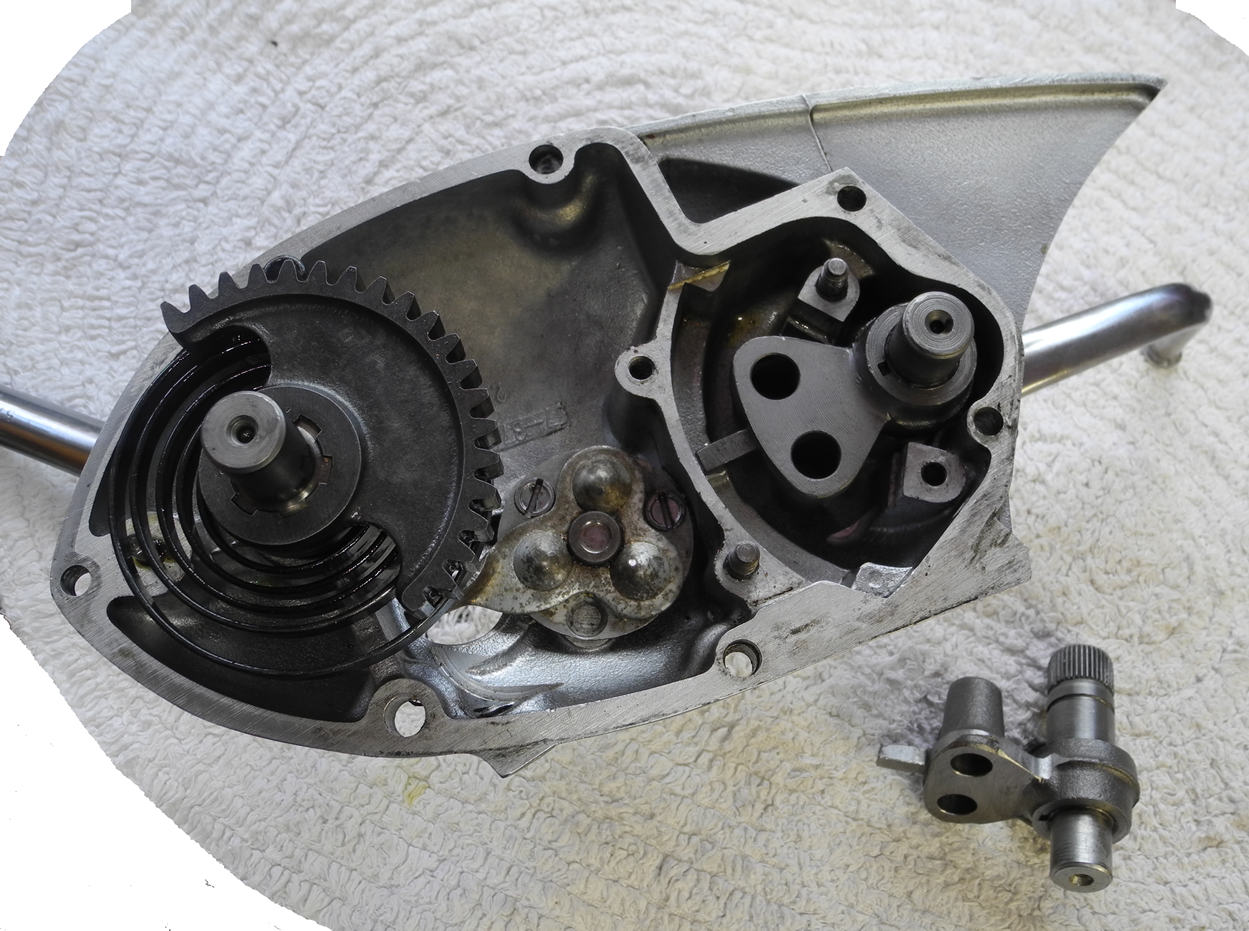
When we pull up on the gearshift lever to upshift, this is the position taken by the quadrant.

When the gearshift lever is depressed to downshift, it puts the quadrant into this position.
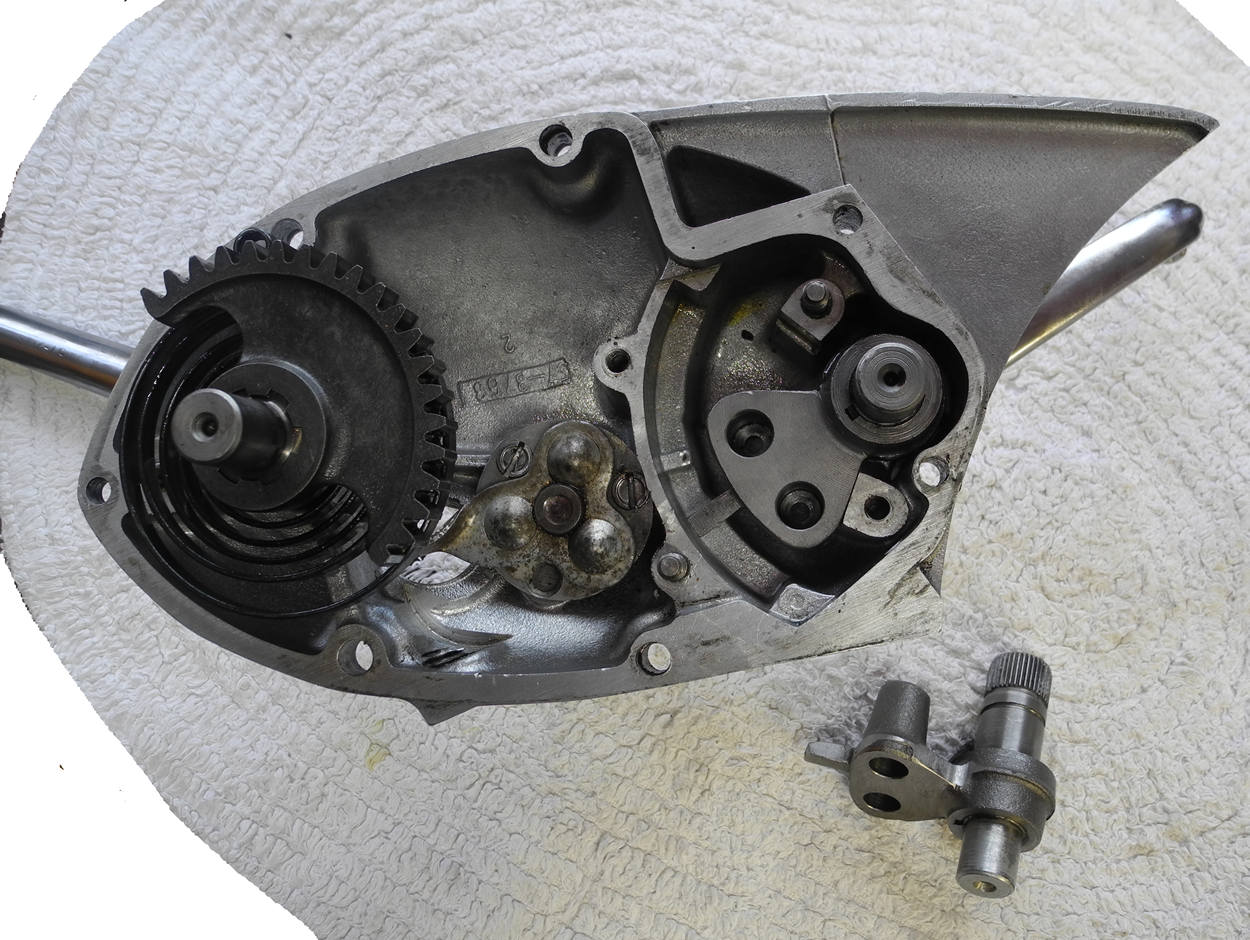
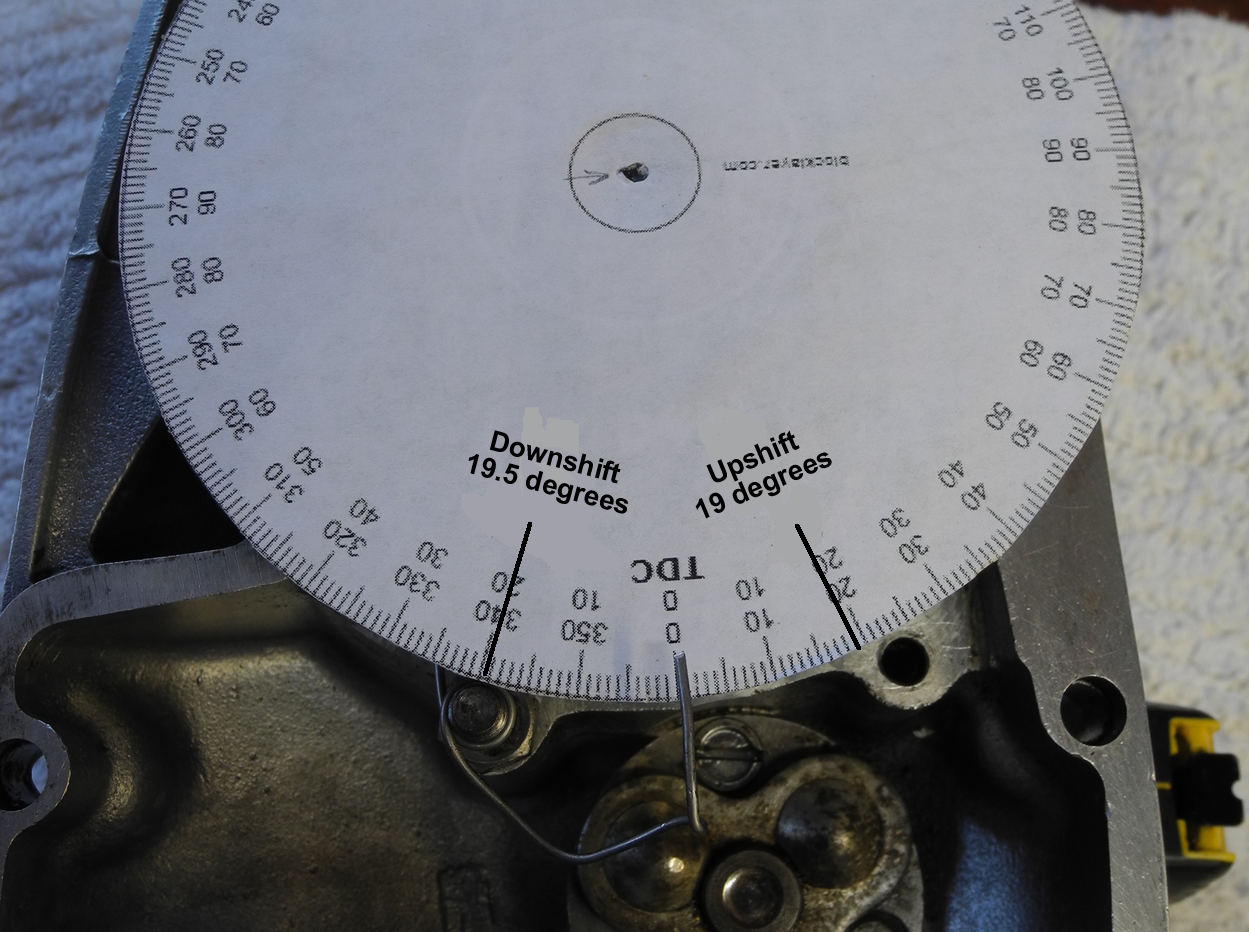
I stuck a degree wheel to the end of the quadrant with blue tack and rigged up a stationary pointer in order to check whether or not the quadrant's up and downshift rotations were equal.

The degree wheel indicated that the downshift quadrant travel was .5 degrees greater than the upshift travel.